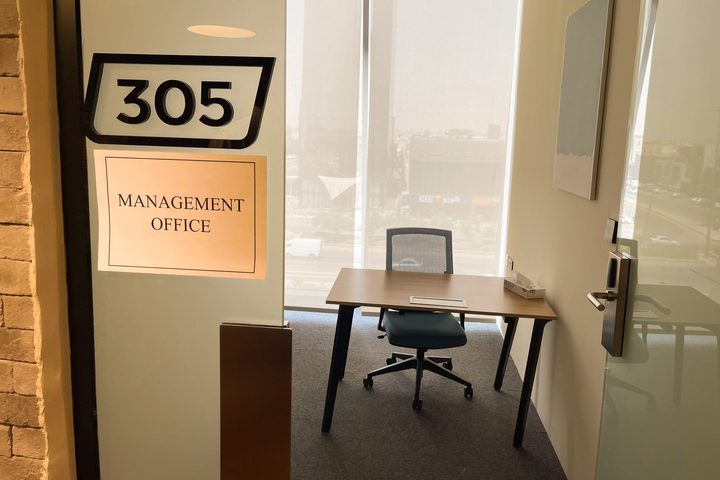
Head of something important
I wanted to be a manager long before I knew what that actually meant. But each promotion turned out to be an entirely new job, one that nobody had taught me. Business school certainly hadn’t.

In my second job after university, I was eager to become a manager. I was around 30 and had studied at renowned business schools, so surely I was qualified to manage, I thought. In hindsight, I no longer fully understand why I was so eager. It was simply what you did after studying business, and everyone around me aspired to it too. It was probably also an ego thing, wanting to be the “boss”. Either way, we all dreamed of sitting on an executive board one day. Somehow a seat on the board felt like the climax of a career, something absolutely worth striving for. I know a lot of my friends felt the same, and I suspect most ambitious young professionals still do today.
So when I started my new job at a large multinational company, I negotiated to be “head of something important” from the outset. This was important, I believed, because important people have something important in their title. The longer the title, the more important the person, I thought at the time. And I got an immensely long title, which didn’t fit onto a single line of my business card, showing just how important I clearly was. Clearly, position and title were also about providing self-confidence for a young professional, who was still needing that.
But at first I was head only of myself. For a year or so, I was the only person in my team.
Then I could finally hire my first two team members. It was an amazing time. I carefully chose who I wanted to work with, and they were great people I’m still in touch with today. Officially it was my first experience as a manager, but I no longer see it as real management experience now. With only a few people in a team, communication, administration and everything else that comes with the job are easy and intuitive. I could simply be myself.
Then I was given more teams, and with them more responsibility. Again, I thought this was what made a manager successful: the more people you lead, the better. But being a manager of managers was a different job altogether, which I didn’t really realise at first. So I led my new team, now made up of managers, exactly as I had led my first two people. But I hadn’t hired any of them myself, and all of them had been my peers before.
I’m a very open and honest person. What I didn’t recognise at the time was that not everyone in my new team shared those values, or was even able to. I made enemies among my manager peers, although I never would have thought I deserved that. I only understood this later, when I realised that people had talked behind my back, that untrue things had been said about me, and that some had tried to put me in a bad light. It is an awful feeling to discover that people are actively working against you.
After that, I could never be as honest and transparent as before. That was very sad, and I hated it. I was not allowed to be myself any more. Over time, though, I learned to play along somewhat. I realised I needed to build a “persona” that looked successful and was liked, and that this perception mattered as much as what I actually achieved. I understood that, but I never really accepted it. I still don’t accept it today. I’m extremely focused on substance, mission and goals, and I simply can’t stand doing things that don’t serve a result. Much of this management theatre didn’t.
To give a concrete example of this theatre, and at the same time an explanation for it: my direct superior once told me that I didn’t owe my loyalty to the company, but to him. That shocked me; it felt completely wrong. I had always put the mission, meaning the interest of the company, above the interest of any single person, even if that person was my boss.
And yet I seem to have been a good manager, at least in the eyes of the organisation and its top management. I was promoted several times in quick succession, and my teams and responsibilities kept growing. My team members also gave me positive feedback and seemed to enjoy working with me. The critical and at times even cynical thoughts I describe here happened only in my head.
Eventually, in the midst of a massive corporate restructuring, I was promoted again and finally made it onto “the executive board”. I was now part of the exclusive group running the company, working on topics that fascinated me and that I was good at, such as strategy and go-to-market plans. I was highly committed and thought I was a good board member. And I was proud, too. I now got a very short title, because, as I had learned over time, the shorter the title, the more important the person (foolish younger me with the two-line title).
What I didn’t grasp at first, though, was that people at this level were even less open than further down, even though their manner and appearance suggested the opposite. Everyone seemed close, shared personal stories and went on business trips together that doubled as team-building exercises in disguise. We got drunk together and shared our secrets. To a newcomer like me, it felt like a close-knit, even friendly group. In hindsight, though, I think only one person on that team was truly honest with me, and she burned out soon afterwards and had to leave. After that I was alone in a group that wasn’t openly hostile, but was hostile under the surface nevertheless, and not only towards me but towards most others too, unless interests happened to align. It felt like a hidden web of rules, agendas and interests that I didn’t find productive at all. Yet it was part of the reality, at least in that organisation, and I couldn’t ignore it.
In my earlier promotions I had never received any support for my new role, apart, of course, from a little of my direct superiors’ time. They shared their views on topics and gave me tips here and there. But nobody had trained me or helped me deal with any of what I have described. I had to figure it out by myself, like every other manager who was promoted at that company. Unfortunately, that is still the reality in many other companies too.
Having become more aware of these issues over time, I set one condition when I was appointed to the executive board: I wanted a coach to accompany me through the transition. It was the best decision I made at the time. And my coach was great. She helped me understand the situations I was in, and how to play my role, lead my team and carry out my mission. Funnily enough, she also taught me some very simple but extremely useful management tools I had never come across before, not even at business school.
But probably her most lasting influence came through a single question: whether I was actually in the right position, and in the right firm. Strangely, the thought that I could also do something else had simply never occurred to me before. All I had ever thought was: I need to make this work, I need to prove I can do it.
At first I didn’t take the question well; if anything, it dented my self-confidence. Was even my coach doubting I was right for the job? I felt insecure. But over time I let the question in and asked it of myself more and more consciously, and the thought that I could do something else became a relief. I had far more options than I had assumed. That felt good. Nevertheless, I still believed I had to stick it out in the role for a few years first, or it would look bad on my CV. Because back then, my CV still mattered to me.
The company operated in an extremely difficult, shrinking market. The industry was in an existential crisis, and the company, too, ran into ever deeper economic trouble. As a result, there were constant rounds of job cuts, and I had to let many people go myself. That was the hardest part of the job, and one more experience I had never sought when I wanted to become a “manager”.
In the end, my leaving was partly my decision and partly not. I had to go, but by then the situation had become unbearable for me, too. I could barely get out of bed in the mornings, and the office felt dark and sombre to me. I was in burnout without even realising it. It was a very destructive environment, not only for me.
After leaving, I never wanted to experience a situation like that again. So I went on to found my own companies rather than join an existing organisation. Each time, I put great weight on shaping the culture of my organisations very actively. They were places where people could speak openly, without embarrassment and without fearing other people’s hidden agendas. “No politics” is still one of my most important principles as a manager. That was how I had led my very first team, which had felt so good back then. And indeed, it worked as a culture for whole companies, too. I had created places I wanted to work in myself. Of course, not everything turned out as I had imagined. But I never stopped trying to build constructive environments.
Knowing what I know today, would I do anything differently if I were a young, newly promoted manager again?
Not with regard to my values, no. My openness and honesty were not a mistake, and my own companies have shown that they work very well as values for whole organisations.
But if I went from peer to boss again today, in a large organisation that I hadn’t built myself, I would want to develop a finer sense for the organisation’s invisible values and to understand people’s intentions better. I would want to learn how to deal better with that invisible human layer of the organisation. Yes, I’m talking about “politics”. But every organisation has it, the good ones included. You can simply see it as the sum of all the interpersonal dynamics at play. Of course, these exist in my own companies too, but there I define the rules, which my people in turn have to learn. When I first became a manager as an employee, though, nobody taught me to read the existing rules. By the time I finally had a coach, I was already caught deep in that web, and only half aware of it.
That’s why I believe so deeply in coaching for people going through a leadership transition. I know how hard it is to walk that path alone, to feel alone and not to belong. And I know from my own experience what coaching can do. That’s why I’m part of LUMINUM: I want to make the best possible support available to as many people as possible who are in the same situation I was in back then.